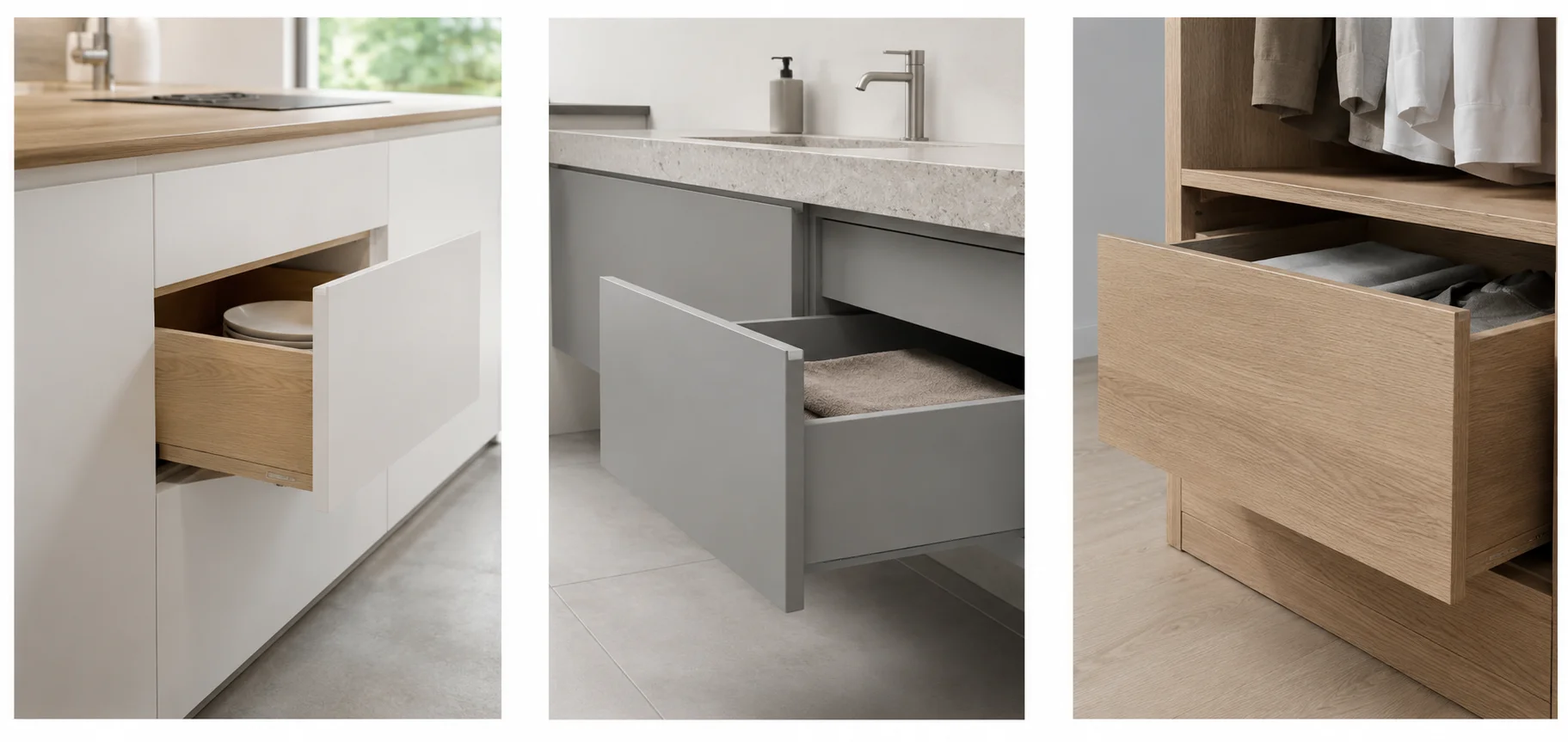
When people compare drawer slides, they usually focus on one question first: does the drawer open and close smoothly?
That matters, of course. But in real cabinet projects, the slide system affects much more than motion alone. It shapes the look of the furniture, how much space the drawer can really use, how quiet the product feels, and how well it performs over time.
That is one reason hidden drawer slides, also called undermount soft-close slides, have become a preferred choice in modern cabinet design.
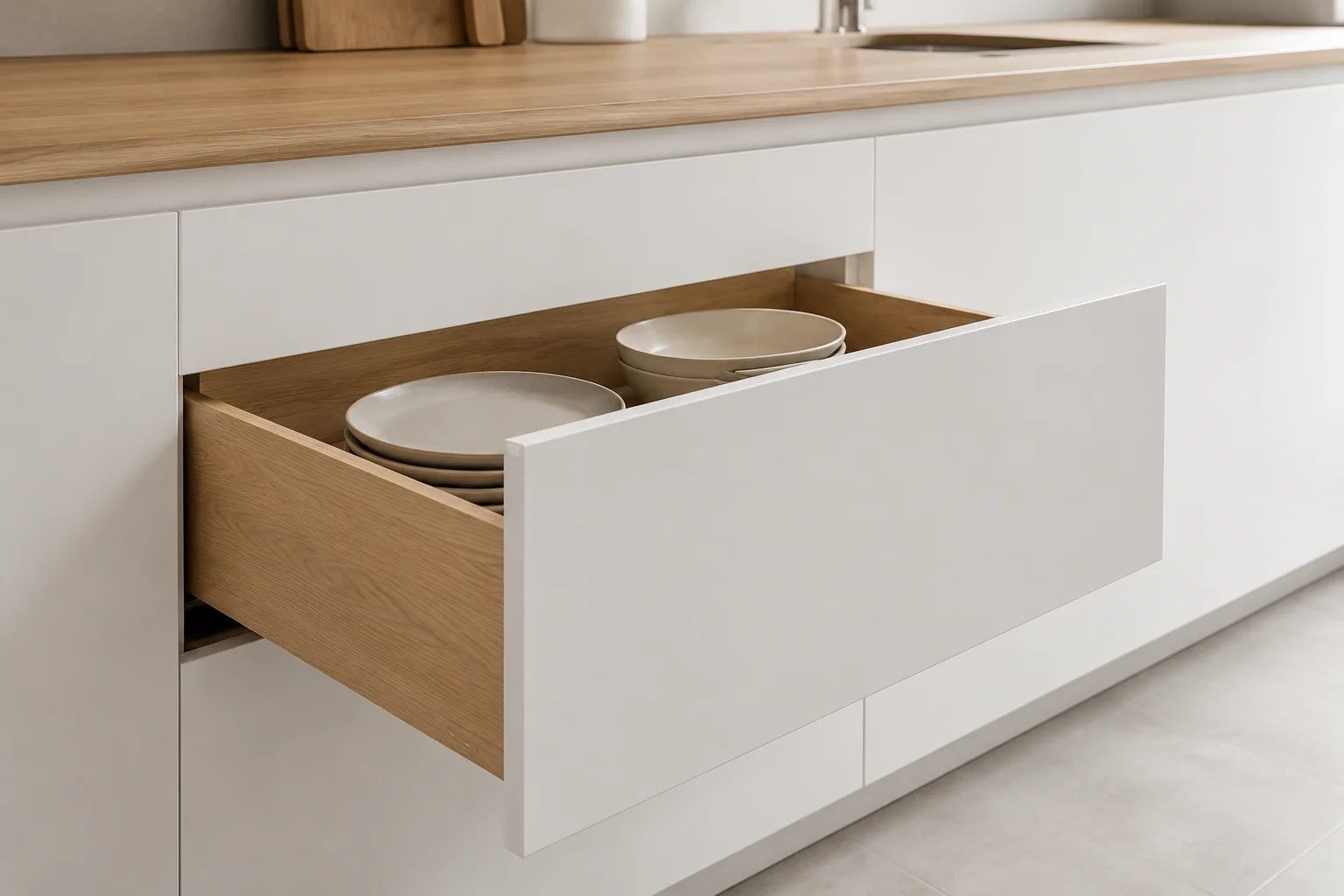
A cleaner look starts with concealed hardware
The biggest visual advantage of hidden drawer slides is simple: they stay out of sight. Because the mechanism is installed underneath the drawer, the cabinet front looks cleaner and more refined. For kitchens, wardrobes, bathroom vanities, and custom furniture, that hidden structure helps the whole piece feel more premium.
In modern interiors, where minimal lines and visual consistency matter, this kind of detail makes a noticeable difference.
Smoother motion changes the user experience
A drawer may be small, but it gets used every day. If it feels rough, noisy, or unstable, the whole cabinet feels less finished. Soft-close undermount slides help the drawer move in a controlled way, so closing feels calm instead of abrupt.
That is especially valuable in homes, hotels, offices, and other spaces where the user experience matters as much as appearance.
For many buyers, this is the point where the product stops feeling like a basic cabinet part and starts feeling like a premium detail.
Better use of drawer space
Another practical advantage is storage efficiency. Since the slide system sits underneath the drawer instead of occupying both side panels, the interior can often be used more effectively. That means better capacity without making the cabinet look bulky.
For compact spaces, this can be a real advantage. For premium projects, it simply helps the design feel more thoughtful.
Strong enough for daily use
There is a common misconception that concealed hardware is only suitable for light-duty furniture. In reality, hidden drawer slides can support a wide range of applications, from everyday home storage to heavier kitchen, office, or utility drawers.
The key is choosing the right specification for the cabinet structure and load requirement. When the system is matched correctly, it can deliver both stability and a more polished user experience.
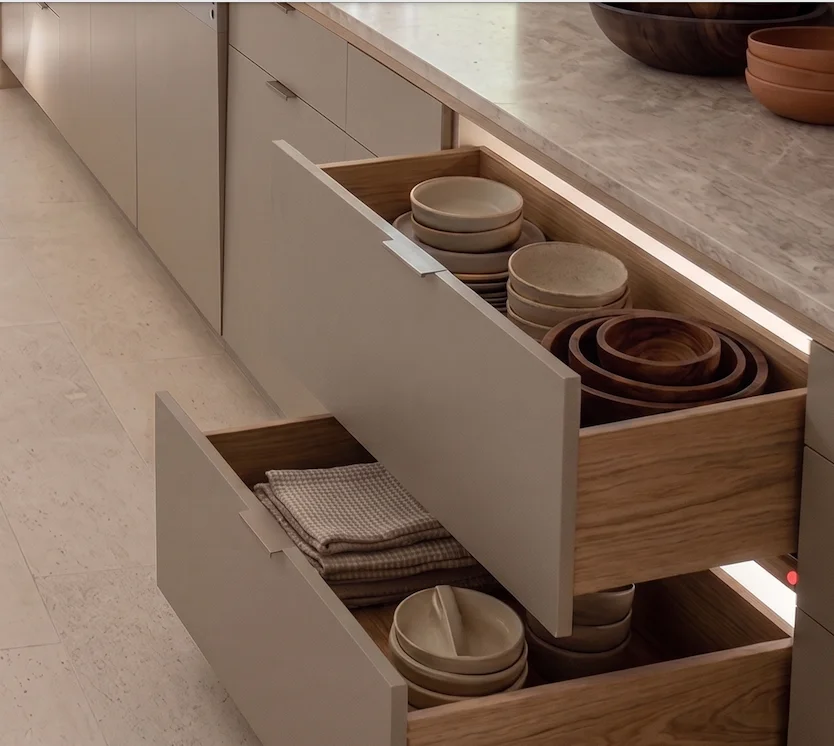
More forgiving in real projects
Cabinet work is never perfectly uniform. Wood moves, cabinet bodies shift slightly, and installation tolerances are never ideal. A good undermount system can help reduce the impact of small misalignments, which makes the drawer feel more stable and helps the finished product stay consistent over time.
For manufacturers and custom furniture makers, that can mean fewer complaints, less rework, and fewer long-term adjustment issues.
When side-mounted slides still make sense
Hidden slides are not the right answer for every project. If the application needs very heavy loading, frequent industrial use, or a more traditional cabinet structure, side-mounted slides can still be the better choice. They are often easier to specify and can perform very well in demanding environments.
So the decision is not about one slide type being universally better. It is about matching the hardware to the job.
A simple way to choose
- Choose hidden drawer slides when you want a cleaner cabinet appearance, quieter soft-close motion, better use of drawer space, and a more premium furniture feel.
- Choose side-mounted slides when you want heavier load support, a more conventional cabinet layout, and straightforward specification for standard builds.
In many residential and custom furniture projects, hidden slides are the stronger fit. In heavier commercial or industrial applications, side-mounted slides may still be the safer option.
Final thoughts
Drawer slides are one of those details people rarely notice when they are good, but immediately feel when they are not. For modern cabinets, hidden soft-close slides do more than improve function. They help define how the entire product looks, sounds, and feels in daily use.
Sometimes, the smallest hardware decision is the one that makes a cabinet feel truly finished.