Think about the drawers you use in a normal day.
You open a kitchen drawer while preparing breakfast. You reach into a bedroom drawer before anyone else is awake. You pull out a bathroom drawer with one hand while holding a towel in the other.
Each drawer has a different job. But they all share one moment that is easy to overlook: the moment they close.
Soft-close drawer slides control the final part of that movement. The benefit may seem small when you test a drawer once. It becomes much more noticeable when you use the furniture every day.
In the kitchen: keeping a busy routine comfortable
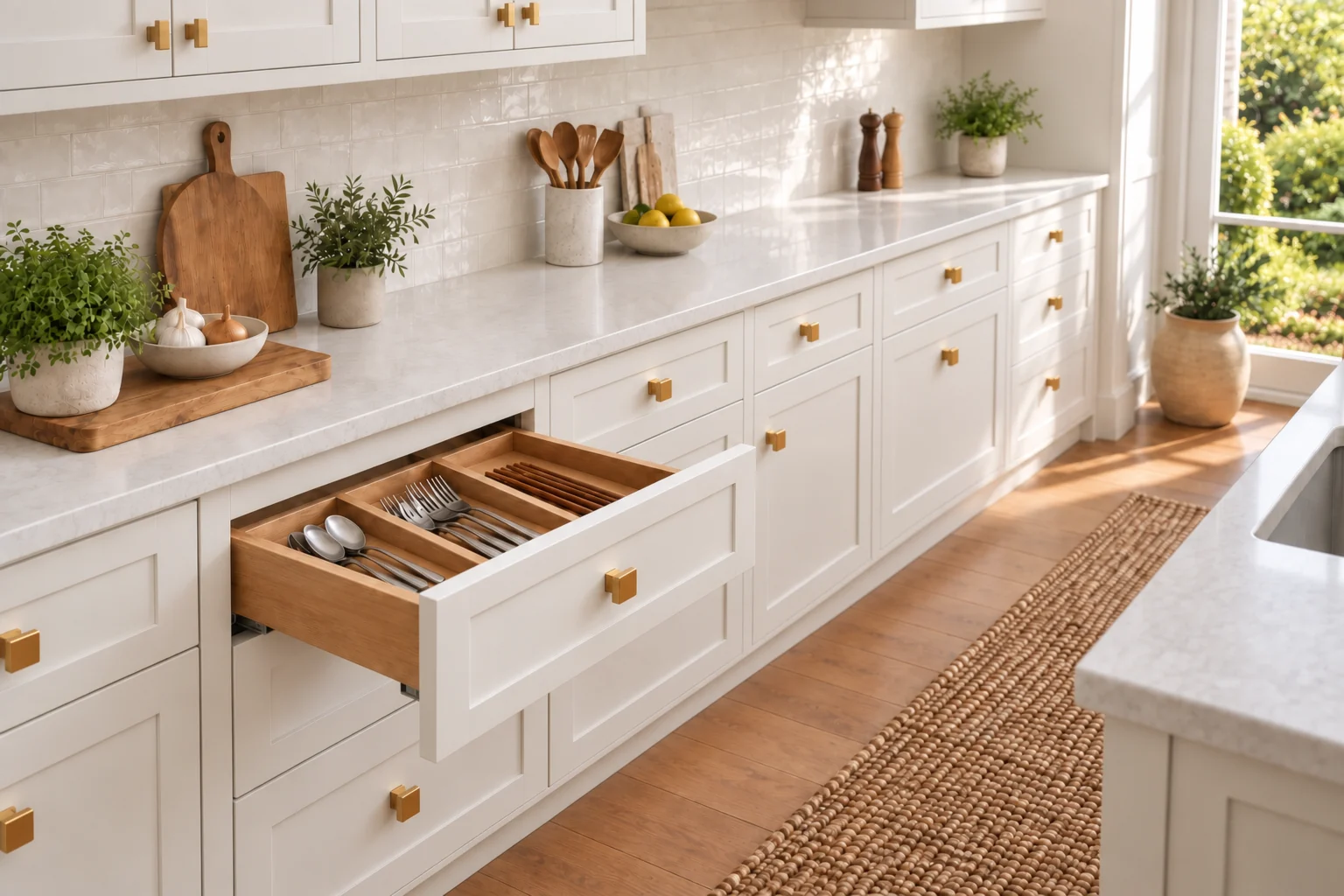
Kitchen drawers are opened repeatedly, often while someone is cooking, cleaning, or putting dishes away. They may hold cutlery, utensils, food containers, or heavier cookware.
In that setting, soft-close helps prevent a drawer from ending each movement with a sharp impact. It makes the closing action feel more controlled, even when the kitchen is busy.
For cabinet makers, the application also calls for careful specification. A drawer for cooking tools and a deep drawer for pots do not have the same load requirements. The slide length, rated capacity, and drawer construction should match what the drawer will actually hold.
Soft-close improves the final movement. The right slide specification supports the drawer throughout its travel.
In the bedroom: reducing disruption
Bedroom drawers are often used early in the morning or late at night. A loud closing drawer can disturb someone nearby, especially in a shared room.
Here, soft-close adds value through a quieter routine. Clothing and personal items can be put away without the drawer shutting abruptly.
The same consideration applies to wardrobes, dressing tables, and bedside furniture. The goal is not to make the hardware noticeable. It is to make the furniture comfortable to live with.
In the bathroom: making compact storage easier to use
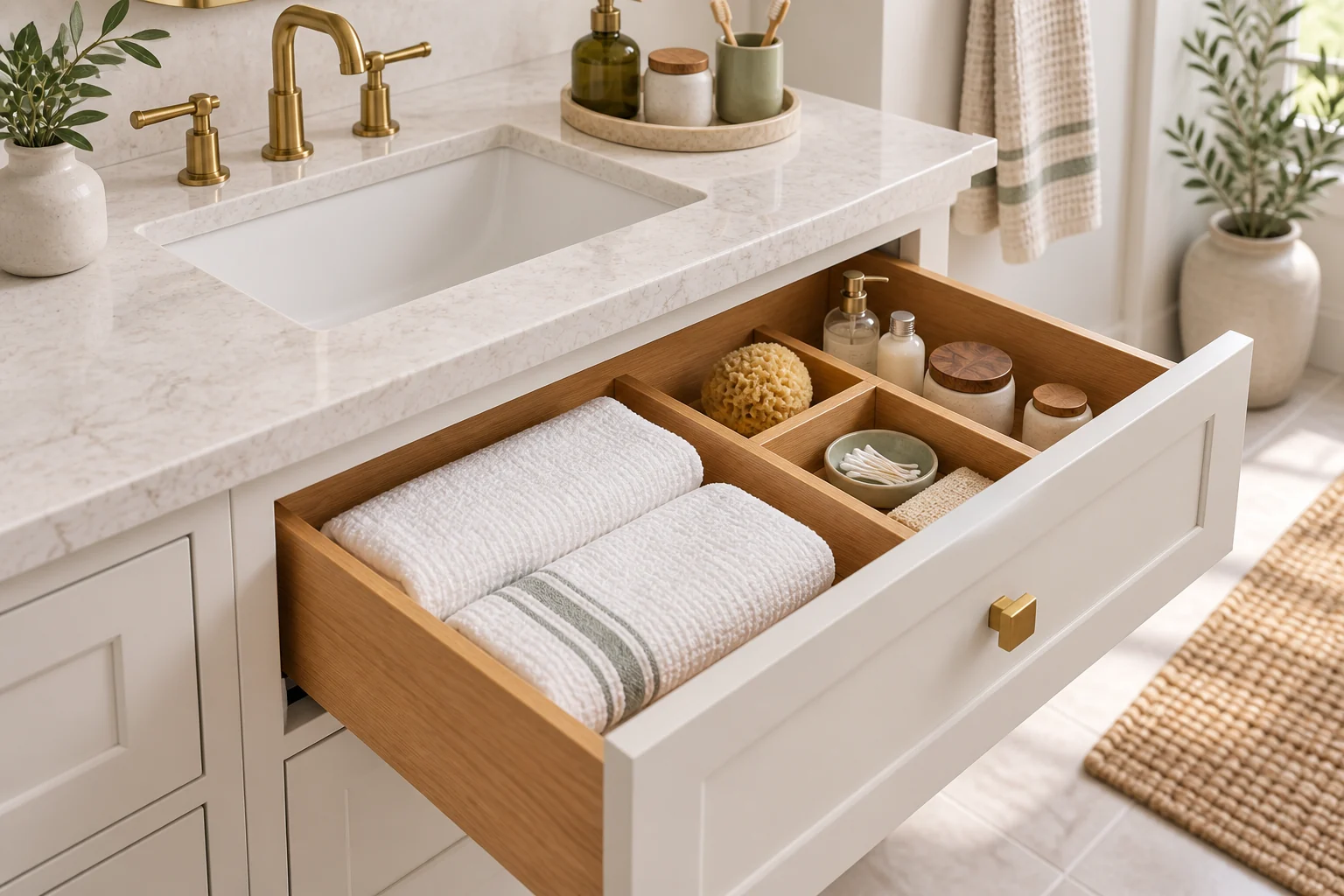
Bathroom vanities often place several drawers in a small area. People use them quickly, sometimes with wet hands or while reaching around a sink.
A controlled closing action can make these compact drawers feel more composed. But the bathroom also raises another selection question: is the complete drawer system suitable for the room’s moisture conditions?
Soft-close describes how a drawer closes. It does not, by itself, tell you how the slide’s materials, finish, or surrounding cabinet will perform in a humid space. Those details need to be checked against the product specification.
In shared spaces: creating a consistent experience
Soft-close can also be useful in home offices, hotel rooms, and other spaces where different people use the same furniture.
Users may close drawers with different amounts of force. A well-matched soft-close system helps the closing action feel more consistent across those everyday interactions.
For a furniture brand or cabinet manufacturer, that consistency matters. Customers may never ask which slide is inside a drawer, but they will notice whether the furniture feels considered when they use it.
Choosing soft-close for the right reason
It is tempting to treat soft-close as a standard upgrade for every drawer. A better question is what the drawer needs to do.
Before selecting a slide, consider:
- How often will the drawer be opened?
- What will it hold when fully loaded?
- How deep and wide is the drawer?
- Is a quiet closing action important in this space?
- What installation and adjustment requirements does the slide have?
Soft-close works best when the closing experience and the technical specification support the same use case.
A kitchen drawer, a bedside drawer, and a bathroom vanity drawer may all benefit from a gentler close. The reason is different in each room. Understanding that difference is how you choose hardware that feels right long after installation.
Explore our soft-close drawer slides, or compare closing styles in Soft-Close vs. Push-to-Open Drawer Slides.