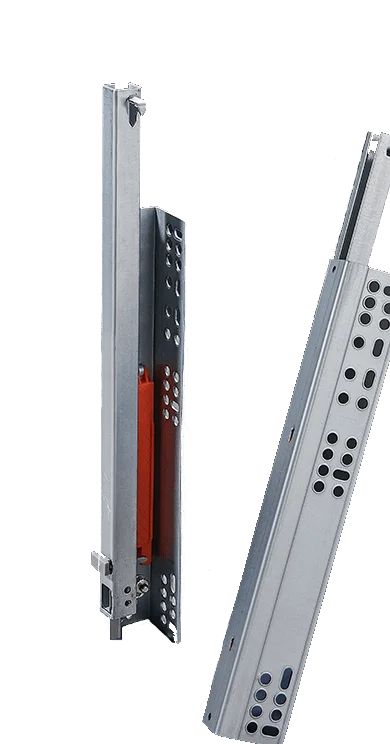
People often choose drawer slides by looking at specifications first: load rating, price, or how easy they are to install.
That makes sense. But in real cabinet projects, the slide mechanism does more than move a drawer in and out. It shapes how the furniture feels, how it looks, and how naturally people interact with it every day.
That is why the choice between soft-close and push-to-open should never be treated as a minor detail.
Two different priorities
These two systems are solving the same basic job, but they lead to very different outcomes.
Soft-close focuses on a familiar, controlled, low-noise experience. Push-to-open focuses on a cleaner front surface and a handle-free look.
So the real question is not which one is better in general. The real question is which one matches the space you are designing.
Soft-close: built for comfort and reliability
Soft-close drawer slides are easy to understand because they work the way most people expect a drawer to work. You pull the drawer open, use it, and close it in a calm, controlled way. The motion feels familiar, and that familiarity matters in everyday use.
What makes soft-close appealing is not just the quiet closing action. It is the overall sense of balance it brings to a cabinet:
- less noise in daily use
- a smoother closing feel
- lower chance of accidental opening
- a better fit for family spaces
- a safer choice for homes with children
For kitchens, bathrooms, bedrooms, and other high-use environments, that combination is hard to beat.
Push-to-open: built for visual simplicity
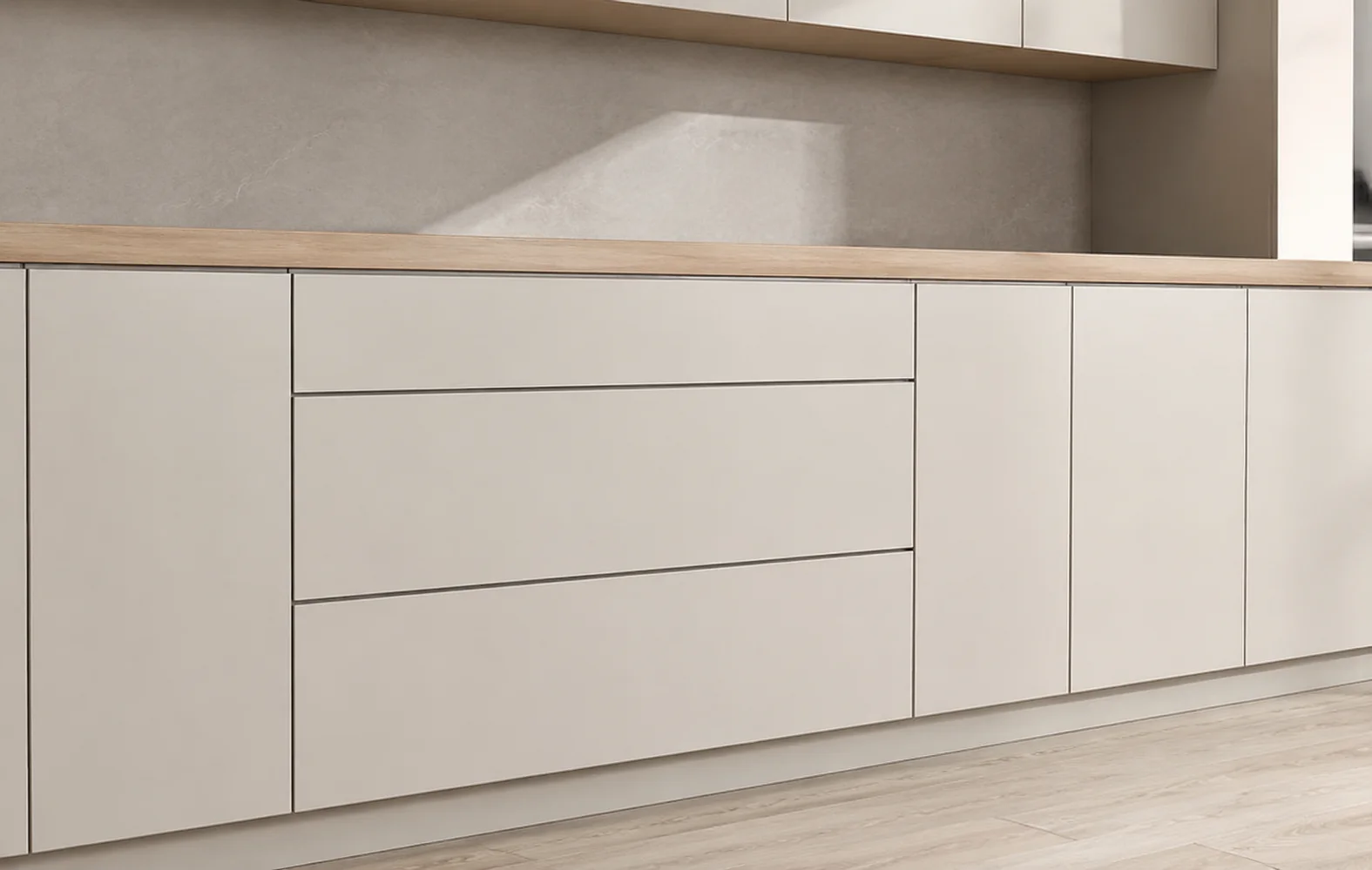
Push-to-open takes a different approach. Instead of relying on a handle, it lets the drawer open with a light press on the front panel. That small change can completely alter the look of the cabinet.
When the front surface is uninterrupted, the whole piece feels more minimal and more intentional. This is one of the reasons push-to-open systems are often used in modern interiors, floating cabinets, and handle-free furniture designs.
It is especially effective when the goal is to make the cabinet face look like one clean surface rather than a collection of separate parts.
The real difference is not mechanical. It is experiential.
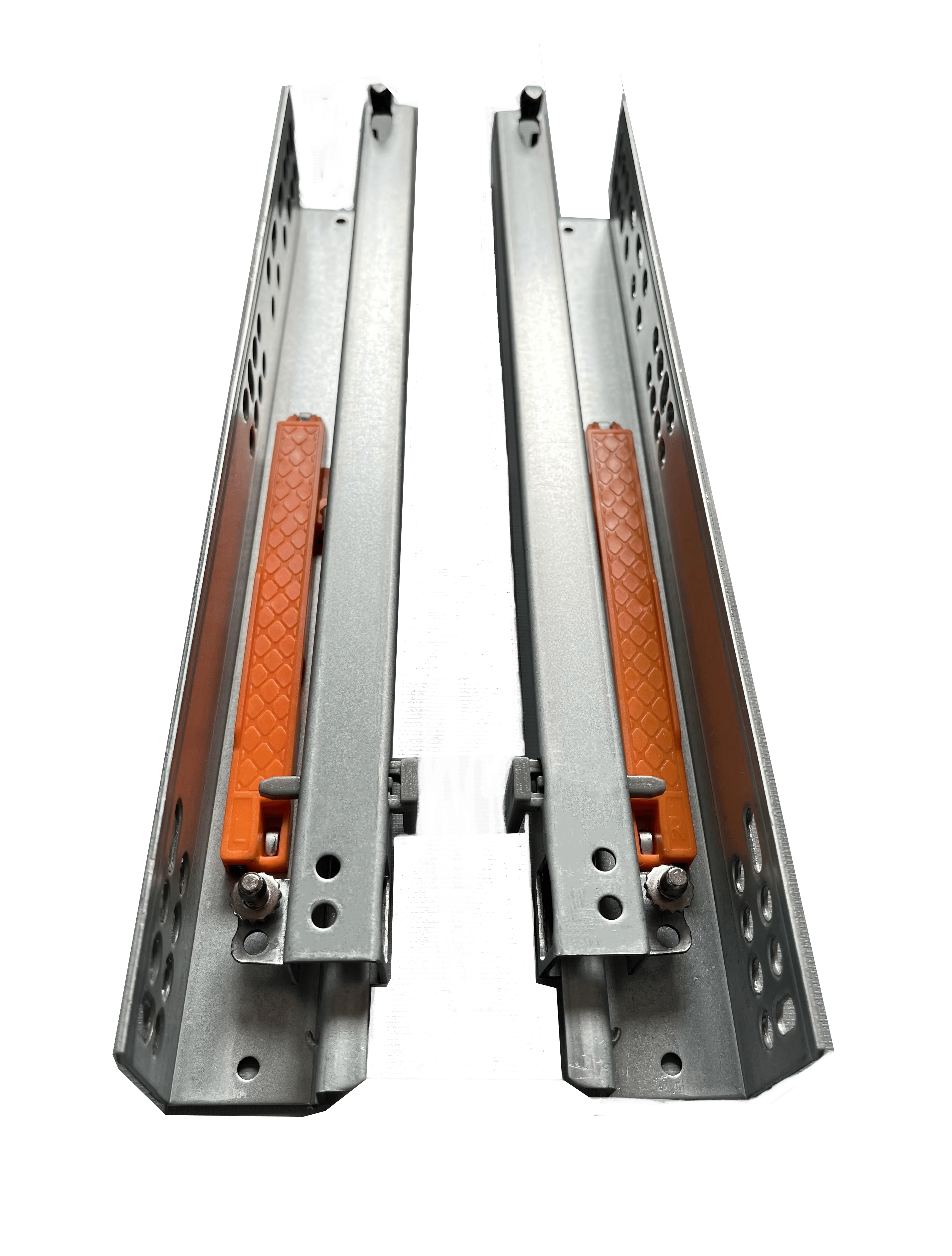
At a technical level, both systems work.
But at a user level, they communicate different messages.
Soft-close says: this furniture should feel easy, calm, and familiar.
Push-to-open says: this furniture should feel minimal, refined, and visually clean.
That is why the best choice depends less on the hardware itself and more on the design intent behind the project.
Where soft-close usually wins
Soft-close tends to be the safer default when the project is built around practicality. It works well when you want:
- a more intuitive user experience
- less noise in the room
- a solution that suits most households
- better comfort for everyday use
- fewer surprises for the end user
If a space gets used all day, by different people, in different conditions, soft-close usually feels more natural.
Where push-to-open usually wins
Push-to-open is strongest when the design language itself is the priority. It works best when you want:
- a handle-free surface
- a more seamless cabinet front
- a stronger minimalist identity
- a cleaner visual line across the room
- a more custom or high-end look
It can make a cabinet feel more architectural. That is a real advantage, especially in projects where appearance is part of the product value.
How to choose
A simple way to frame the decision:
Choose soft-close if your priority is:
- ease of use
- quieter daily operation
- family-friendly practicality
- broad compatibility
- a familiar drawer experience
Choose push-to-open if your priority is:
- a handle-free look
- visual simplicity
- modern styling
- cleaner cabinet surfaces
- a stronger design statement
Final thought
Soft-close and push-to-open are not competing ideas in the same category. They are answers to different design questions.
Soft-close is about making the drawer feel steady, quiet, and comfortable. Push-to-open is about making the cabinet look cleaner and more deliberate.
In other words, the best slide is not the one with the most features. It is the one that best supports the way the furniture is meant to be experienced.